
If you’re reading this, chances are you’re feeling overwhelmed, disconnected or simply not able to enjoy life in the ways you’re wanting to. Maybe you’re a parent and not able to be playful, present, and share those beautiful moments with your little one. Or maybe you’ve lived through traumatic experiences and feel like you’re living on autopilot. These are often unconscious patterns we create to protect ourselves. Maybe you’re simply someone who can’t seem to find enough energy, you’re carrying tension throughout your body, or you struggle with everyday tasks.
No matter what brought you here today, I’m so glad you’re here. My hope is to help you understand what an overwhelmed nervous system can feel like and share a few simple ways you can begin supporting yourself and your nervous system.

If you’re unsure what the difference is between emotions, feelings, and moods, I made a page explaining them in more detail. Understanding the difference can help you recognize your patterns instead of automatically reacting to them. As you become more aware of what’s happening inside of you, it becomes easier to release stress, anxiety, and even some of the physical symptoms that chronic stress can contribute to.
We have many places and systems throughout our bodies that play a role in how we experience stress. Although I won’t be breaking them down in great detail, here’s a quick overview.
- The amygdala detects potential threats and helps activate the body’s stress response.
- The hippocampus helps process and store memories.
- The autonomic nervous system (sympathetic and parasympathetic) carries involuntary signals between your brain, organs, glands, and the rest of your body.
- The fascia is the web like connective tissue that surrounds and supports your muscles, organs, nerves, and bones.

When we experience stress, our muscles naturally tighten. If that stress continues for long periods of time without opportunities to rest and recover, that tension can become chronic. Because the fascia is closely connected with our muscles, it can also become less mobile, which may contribute to stiffness, aches, reduced mobility, and discomfort.
Many people notice that emotional stress shows up physically. This can look like migraines, body aches, neck tension, digestive discomfort, fatigue, or simply feeling disconnected from yourself. Sometimes it even shows up in the never-ending doom scrolling cycles we’re all guilty of from time to time because staying distracted can feel easier than slowing down and noticing what’s happening inside of us.
The beautiful thing is that our nervous system is adaptable. Just as it learned ways to protect us, it can also learn what safety feels like again.
I want to share a few ways you can begin supporting your nervous system because I truly want to help guide you toward healing. When we begin healing ourselves, that healing often ripples into our relationships, our children, and the world around us. It’s such a beautiful journey to experience.
Let’s start with a moment of gratitude.

You’re showing up for yourself today, and that takes courage, love, and strength. It shows a true desire to create more peace, connection, and healing within yourself.
Now take a slow, cleansing breath in, and an even longer breath out.
Longer exhales can help encourage your body’s relaxation response. Simply taking a moment to focus on your breathing can help you feel more grounded while bringing your awareness back to the present moment.
With that being said, here’s a wonderful breathing exercise I’d love to share with you.
4-7-8 Breathing
This breathing technique may help with sleep, stress, anxiety, anger, and bringing yourself back to center.
- Sit or lie down somewhere comfortable.
- Rest your tongue gently on the roof of your mouth behind your front teeth.
- Breathe out completely through your mouth. A gentle whooshing sound is recommended if it feels comfortable.
- Breathe in through your nose for a count of four.
- Hold your breath for a count of seven, only if it’s comfortable for you.
- Slowly breathe out through your mouth for a count of eight.
- Repeat until you begin to feel calmer and more centered.
I also like to gently tap my hand or my chest while I breathe. For me, it helps me count without getting caught up in my thoughts and serves as a grounding technique that helps me stay present.

EFT (Emotional Freedom Technique) Tapping
Many people find EFT tapping helpful for reducing feelings of stress, becoming more aware of what they’re feeling, and creating a pause before automatically reacting.
- Use one or both hands and gently tap each point about 5 to 7 times.
- Side of the hand
- Beginning of the eyebrow
- Side of the eye
- Under the eye
- Under the nose
- Chin
- Collarbone
- Under the arm
- Top of the head
- Take a few slow breaths and allow yourself to arrive in this moment.
- Begin tapping the side of your hand while acknowledging what you’re feeling and reminding yourself that you’re safe in this moment.
- Move through each tapping point while noticing your thoughts, emotions, and physical sensations. You can also tell yourself what you’re ready to let go of.
- When you’re finished, notice any shifts within your mind or body. Offer yourself gratitude for taking this time to care for yourself.

Here Are a Few More Ways You Can Support Your Nervous System
- Journaling to release racing thoughts.
- Stepping outside for 10 minutes in the morning to get natural sunlight.
- Taking a 15-minute walk each day.
- Self-massage.
- Dancing and allowing your body to move in whatever way feels good.
- Affirmations.
- Acknowledging the emotions and feelings that show up instead of pushing them away.
There are so many ways to reconnect with ourselves and support our nervous systems. Some practices may work beautifully for someone else but not for you, and that’s completely okay. Healing isn’t about doing everything perfectly. It’s about finding what you connect with and what helps your body feel safe.
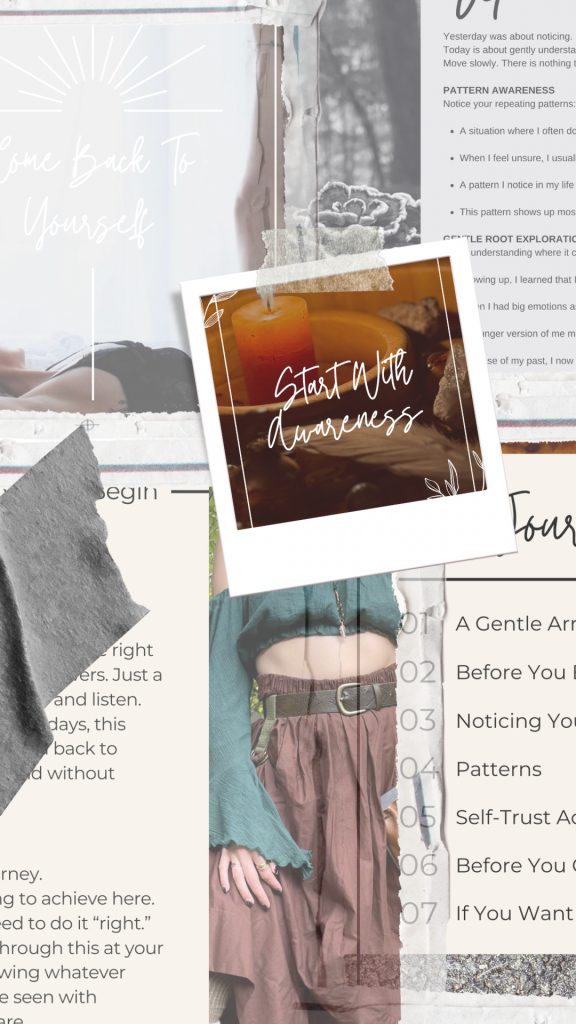
If you’re not sure where to begin, I created a free 3-Day Self Trust Reset to help you become more connected with how you feel and what’s going on inside of you. The first step is simply acknowledging what’s happening. Your reactions, your thoughts, your emotions, your irritability, and how it all shows up in your body.
From there, you can begin building new habits that gently teach your body that it doesn’t always have to stay in survival mode.
If you’re ready to go a little deeper, my 14-Day Self Trust Reset is available as a self-guided journey or with one-on-one guidance from me. Together we’ll begin recognizing the patterns, protective habits, and beliefs that no longer serve you, while creating more self-trust, regulation, and connection along the way.